
I heard Ed Catmull, innovative president of Pixar and Disney animation studios, speak on Thursday at BYU. He spoke about a topic that I have been thinking a lot about lately – how do you create the best situation for a multidisciplinary team to work on 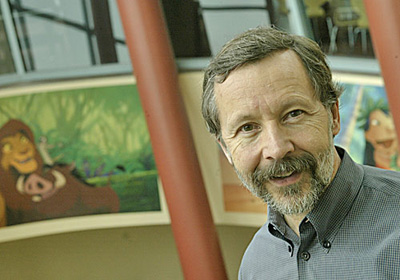 something that has never been done before?
He started with a comment made to him by a producer: “It is not finding good people that is our problem, it is finding great ideas.” Ed Catmull argued why this statement is wrong. He gave examples of great ideas in the animation studio that did not work with a certain team, but another team took them and made them hugely successful. His point was that the most important thing is to create a team that works well together, especially when you are doing something that has never been done before.
Here are some of his ideas:
- Everyone needs to understand that they are equally valuable and important (e.g. neither the programmers, the artists, or the managers could feel like second-class citizens)
- Things will go wrong when you are the first people to do something new, don’t be afraid of making mistakes, just find ways to handle them well. “We are in the job of doing something new,” Catmull said, “Our measure is not whether we avoid different things. It’s how we respond to things when they go wrong.”
- Don’t let everything that is good mask the things that are not good – do a “postmortem” analysis, a review of each project to discuss what went well and what could be better.
- Managers are simply responsible for helping the team merge well.
- “I’ve always believed that you shape the management team around the talent rather than try to force people into a certain way of doing things.”
 I also heard Brent Adams speak this semester on the same topic. He has been the driving force behind BYU’s very successful multidisciplinary computer animation program. In the past few years 1,500 animations h
 ave been submitted to the student Emmys, and BYU students have impressively won 5 out of 12 best computer animation awards and 2 of the 6 student academy awards.
He said where education has typically been an “individual sport” (with even group projects not being designed very well) -the advantage in this world will always go to those who can out-innovate and out-collaborate their competitors. Brent gave some very valuable ideas for designing multidisciplinary teams to work well in creative collaborative thinking:
- Flexibility – approaching the problem from many different directions
- Fluency – ability to generate LOTS of ideas (if you want to have a good idea, have lots of them)
- Novelty – originality, uniqueness, “I would have never thought of that”, innovation
- Definition – being good at defining the context, constraints, etc.
- Roles – design roles and responsibilities which allow people to play to their strengths.
Aside from how much I like both the Pixar and BYU animation movies, my interest in this all stems from the fact that I think some of the most innovative teams in today’s world will be both multidisciplinary and cross-cultural. I am interested in finding the best technologies and techniques to reduce the miscommunication and increase the innovative potential from having such a rich combination of experiences, expertise and perspectives.
Questions:
Does anyone have any good ideas about how to create an effective, innovative team?
Has anyone been a part of a team like that? If so – what made it work well?
Two good quotes from John Lasseter, of Pixar:
“Art challenges the technology, technology inspires the art”
“Ed is the reason we’re all here,” said Lasseter, noting Catmull’s anti-bureaucratic, artist-driven, bottom-up management style. “He’s the ultimate parent — he helps you be the best you can be.”
Come to my family reunion in Almo if you want to meet my cousin Ed 🙂
Hi Clint,
nice article. Just a question for you, if I understood well your interest on this topic is because you “think some of the most innovative teams in today’s world will be both multidisciplinary and cross-cultural”. However while reflecting on this, do you think that innovation and effectiveness will be based on those elements? Innovation and effectiveness in persons or teams has been present independently of the combination of those factors, don’t you think? And/or the attitudes that the authors mentioned about team work I do not see them exclusive for multidisciplinary or cross-cultural teams.Then, if I understand well, imho the most important element for any team is each on of its members, or what will be your opinion?
Carolina,
I like your questions – thanks for giving me a chance to explain myself a little better. I definitely do not think that you need a team to be either multidisciplinary or intercultural as a pre-requisite for innovation and creativity. In fact, in some cases, I imagine it makes it more difficult (if there is not a good level of trust established, when ethnocentrism takes over, etc).
But I do think that one thing that sparks creativity and innovation is when you can see the same thing, but in a new way – when you make new connections. The innovation/ creativity can be sparked by people who offer multiple different perspectives, and by having a team that is multidisciplinary and/or multicultural you provide a rich source of these multiple perspectives, of different ways to view/ experience/ problem solve in the same scenario.
So I am curious – how do you structure a team (and communication within that team) in a way that you can tap into the rich source of multiple perspectives and expertise areas, so trust and rapport is established and multiple conflicting viewpoints are valued, where differences in perspectives add additional value to the end results, where miscommunication is minimized and innovative potential is maximized?